
Years ago, website design and Search Engine Optimization (SEO) were two completely different disciplines. Designers focused on colours, layouts, and visual storytelling, and SEO specialists focused on keywords, backlinks, and technical indexing.
That difference is gone today. Google’s search algorithms have changed, and now it assesses a website not just by what it says but also by how it behaves and how it feels. Modern web design = SEO. SEO = modern web design. You can have the best content in the world, but if you’re not building your digital footprint around user experience (UX) and technical performance, your search engine rankings won’t save you.
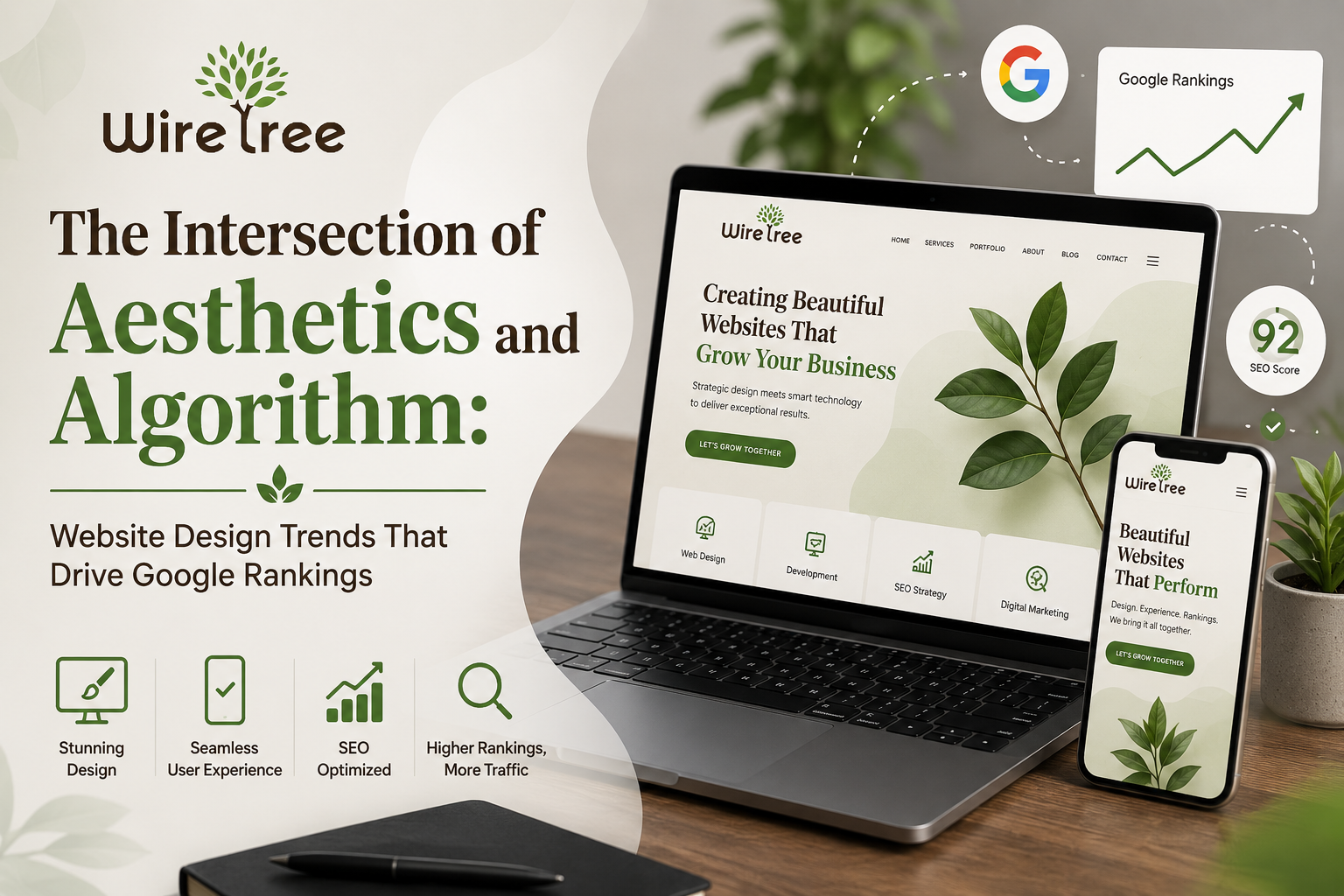
If you own a business in Toronto or anywhere in Ontario and want to improve your digital presence, here are the latest website design trends that are really making a difference on Google.
1. Designing for E-E-A-T (Experience, Expertise, Authority, Trustworthiness)
E-E-A-T is a huge focus for Google’s search evaluators, particularly for businesses that can influence a user’s money, health, or safety. One of the biggest trends in modern web design is to visually structure your site so that it immediately conveys this credibility to both human visitors and Google quality raters.
Dedicated Author and Team Blocks: Non-anonymous blog posts say hello. Modern design features well-styled author bio boxes with links to professional social profiles and credentials.
Transparent Trust Signals: Integrate dedicated, high-impact sections for client testimonials, live Google Review widgets, case studies and industry certifications directly into your landing page designs.
Accessible Essential Pages: Making sure your Privacy Policy, Terms of Service, and full “About Us” pages are clean and easy to find in a sticky footer layout.
2. Radical Optimization of Core Web Vitals
Google’s Core Web Vitals, which measure visual stability, loading performance, and interactivity, are a foundational ranking factor. Your website can look great, but if it takes too long to render, Google will penalize your visibility.
So, web designers are moving towards performance-friendly layouts:
Optimized Image Delivery: Leveraging next-gen image formats (like WebP or AVIF) and lazy loading so images only load as a user scrolls down the page.
Minimizing Layout Shifts (CLS): Making sure all structural elements, banners and fonts have defined dimensions in the code so content doesn’t awkwardly jump around while a page is loading.
Clean semantic HTML5 layouts that search engine crawlers can immediately understand to read page hierarchy. Less heavy JavaScript. Streamlined Code Architecture.
3. Mobile-First & “Thumb-Friendly” Menus
Considering that most web traffic comes from mobile devices, Google first indexes the mobile version of your website. Just shrinking a desktop site for smaller screens isn’t enough anymore.
The newest trend is thumb-friendly navigation. Designers are shifting important navigation elements, search bars and Call-to-Action (CTA) buttons to the lower half or bottom of the mobile screen where a user’s thumb naturally rests. This seamless layout reduces bounce rates and improves dwell time — two indicators that signal to Google that your website delivers a high-quality user experience.
4. Interactive UX and Micro Interactions
Consumer attention is drifting away from static walls of text. Modern web design features interactive elements that encourage users to stay longer, which can directly boost your SEO metrics by increasing “time on site.”
You can add interactive elements such as price calculators, visual assessment tools, dynamic comparison charts, or fluid micro-interactions (such as subtle hover animations on buttons) to ensure users are actively engaged on your page. Google will see that users are spending time on your site rather than clicking back to the search results, and will consider your domain highly relevant.
5. Semantic Accessibility (AODA Compliant)
In Ontario, web accessibility is not just a best practice; it is a formal standard. Google prefers websites that are fully accessible to everyone, including those using screen readers.
Modern web design inherently includes high-contrast text, scalable typography, logical heading structures (H1, H2, H3 hierarchy) and descriptive alt text for all visual media. A crawlable site is well-optimized for search engines to index your content accurately.
Change Your Digital Footprint | WireTree
Does your website have what it takes to win in today’s competitive search environment? A beautiful design is half the battle. You need the technical framework to get noticed on Google.
At WireTree, we combine cutting-edge visual design with advanced SEO engineering. Right here in Toronto, we build custom, high-performance websites designed to rank higher, load faster, and convert casual visitors into loyal customers.
Let’s talk about how we can take your brand’s digital strategy up a notch.
Come and see us at www.wiretree.ca
Give Our Team a Call: 416-907-0561
Our Toronto Office 535A Bloor St. West #202 Toronto, ON – M5S 1Y5